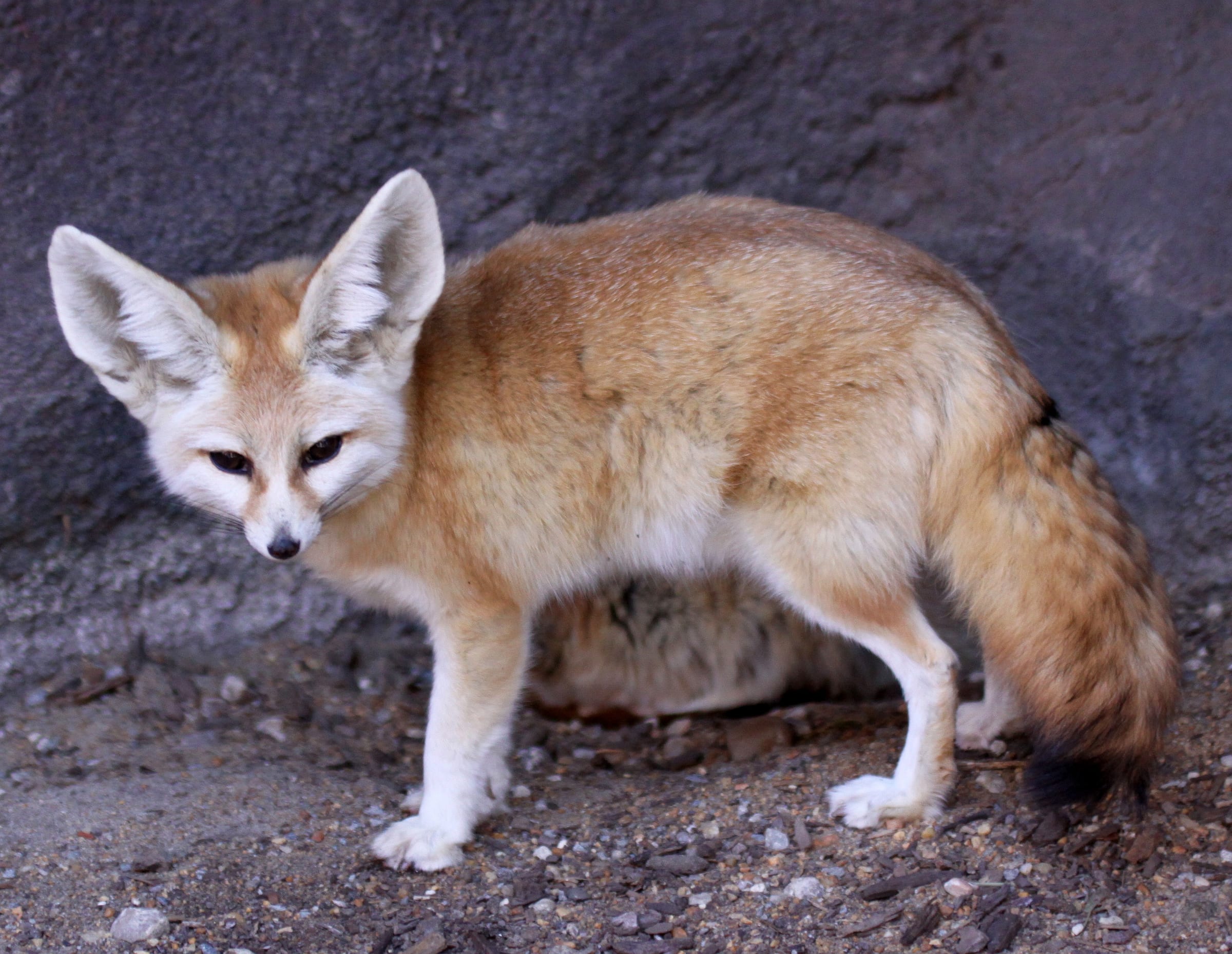
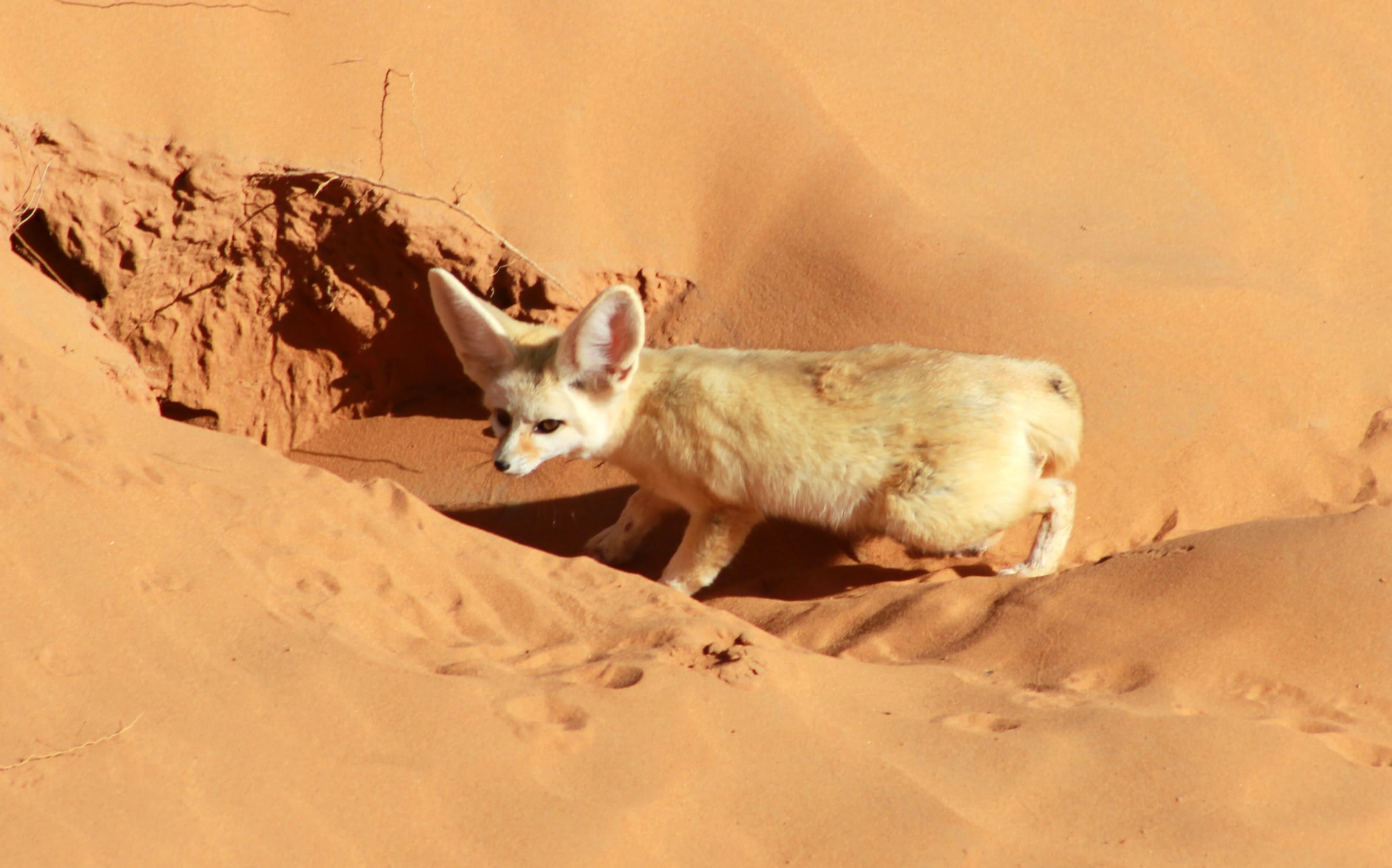
The world's smallest fox lives where almost nothing else lives — on the dune fields of the Sahara, a flat half-million kilometres of moving sand. By midday the ground is too hot to walk on. By the early hours before dawn it is cold enough to crack stone. Somewhere between those two extremes, the fennec is curled into a den six feet underground, sleeping with a tail tucked over its face.
It comes out at dusk. The ears arrive before the rest of the animal — outsized, almost comic, and built for a continent of silences. They dissipate heat. They locate beetles burrowing beneath the surface. They turn, independently, toward sounds the human ear cannot register. The body that follows them is barely larger than a housecat's, with paws furred to the underside so they will not burn.
Ears arrive before the rest of the animal.
An ear for the desert
A fennec's ears are nearly fifteen centimetres long — proportionally the largest of any canid. The skin is thin and laced with vessels, dumping heat into the cool night air. The auditory canal is wide and angled, and inside, the eardrum is sensitive to frequencies a metre underground. A hunting fennec will stand motionless for whole minutes, turning the ears like satellite dishes, listening for the dry scratch of a beetle's leg against sand.
Engineered for thirst
Fennec foxes can survive without ever drinking. They pull water from the moisture in their prey — geckos, locusts, eggs, roots, fruit. Their kidneys concentrate urine to a degree most mammals cannot manage. They pant at 690 breaths per minute when overheated, and shiver awake in the cold hours before dawn. Every variable of their physiology has been negotiated with a place that, by any reasonable measure, does not want them there.
Small, social, vocal
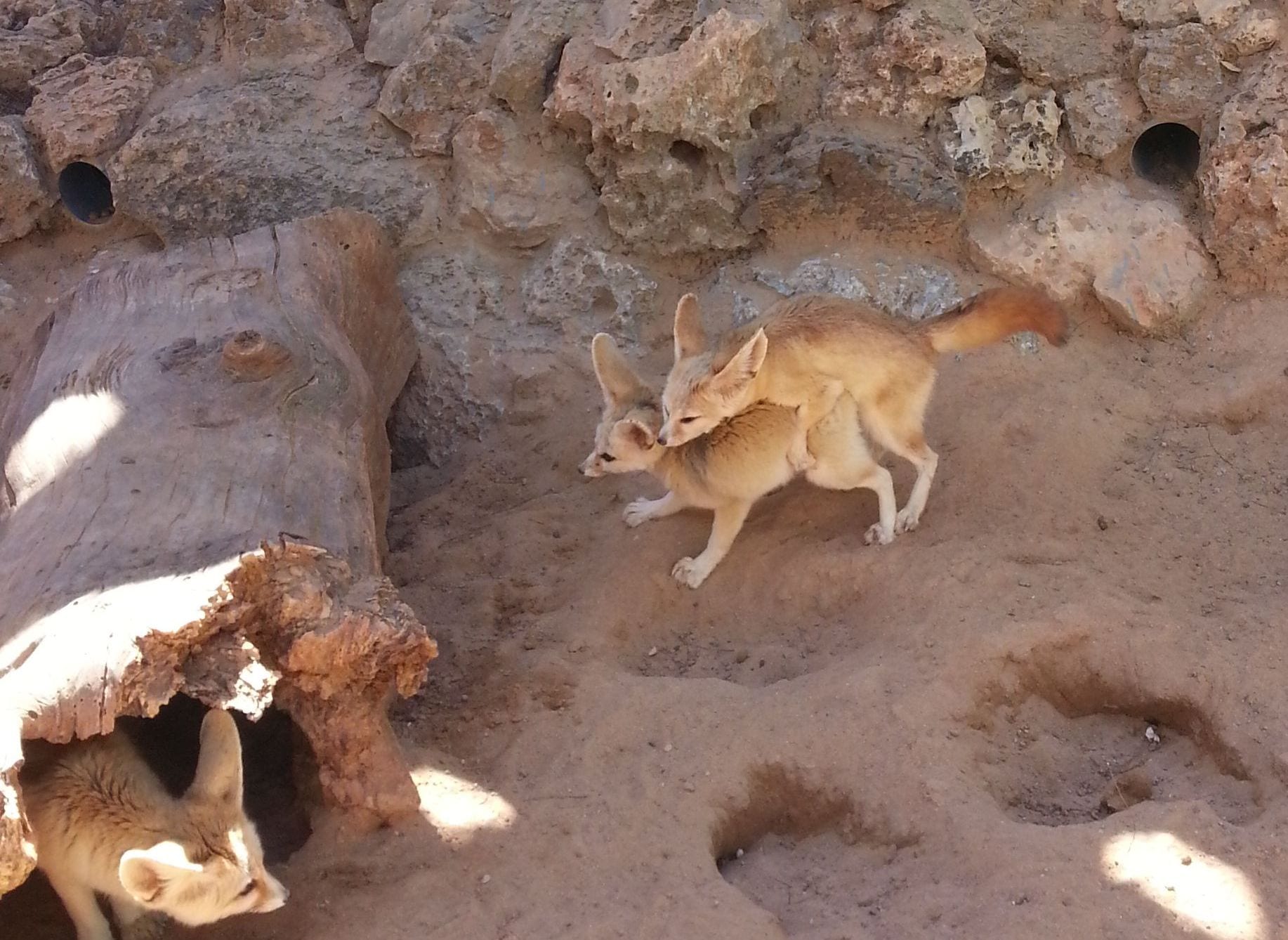
Despite the solitary lives the desert suggests, fennecs live in social groups — pairs that mate for life, occasionally with grown offspring from previous years. They communicate through an unusually wide vocal repertoire: yelps, whimpers, a high pure whistle the females use to call kits home. Dens are dug deep beneath shrubs whose roots stabilize the sand, and the same warren can be reused across generations of foxes.