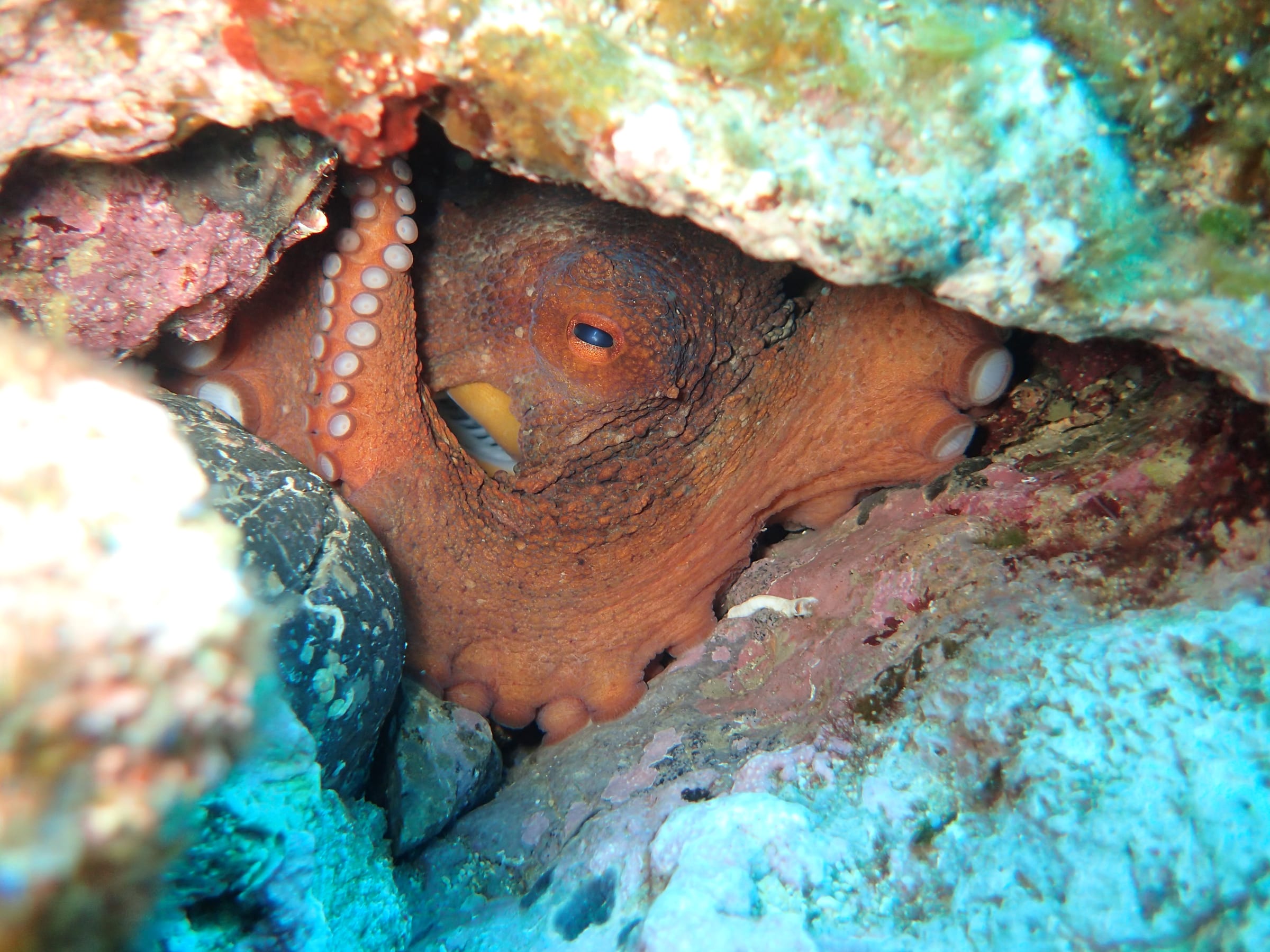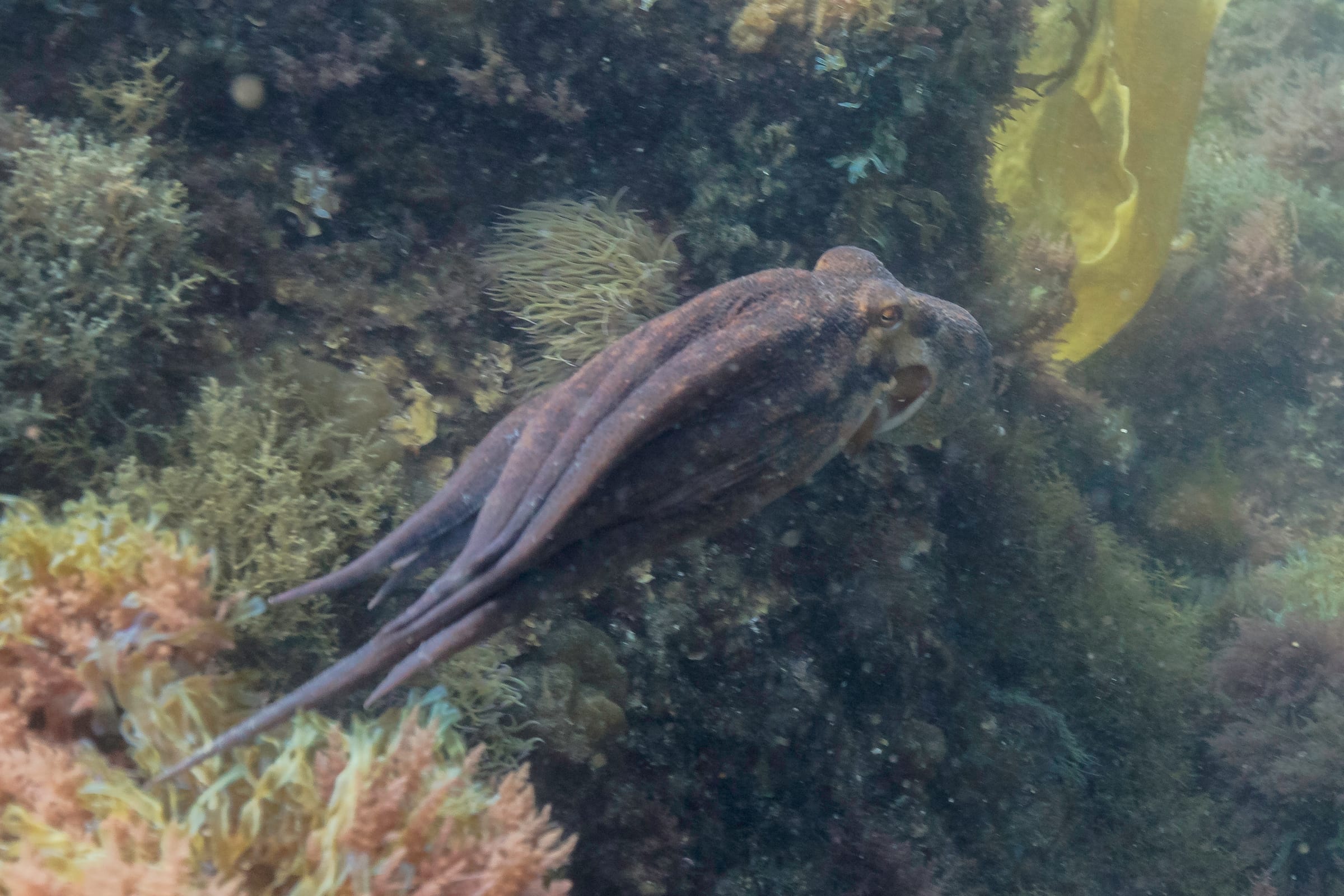
It has three hearts. Two pump blood through the gills, the third sends it through the rest of the body — except, oddly, when the animal swims, at which point the third heart stops, which is one of the reasons octopuses prefer to walk. Its blood is blue, because copper carries oxygen better in cold water than iron does. Its skin tastes the water, sees in colour despite eyes that cannot, and rewrites its own pattern in under a second.
In the long story of how a body can be put together, the octopus is the version life wrote without any of the help. It evolved its eyes independently of ours, separated from us by 500 million years and a great deal of mud. Of everything on Earth that thinks, it may be the most alien thing that does so within reach.
The most alien intelligence we can hold in our hands.
Nine brains
Two-thirds of an octopus's neurons live in its arms. Each arm tastes, reaches, and grasps with a degree of independence that genuinely is hard to call anything other than thinking — a severed arm can still uncoil a jar, recoil from acid, hand food toward what would have been its mouth. The central brain coordinates rather than commands. It is closer to a collective than a hierarchy.
Skin that sees
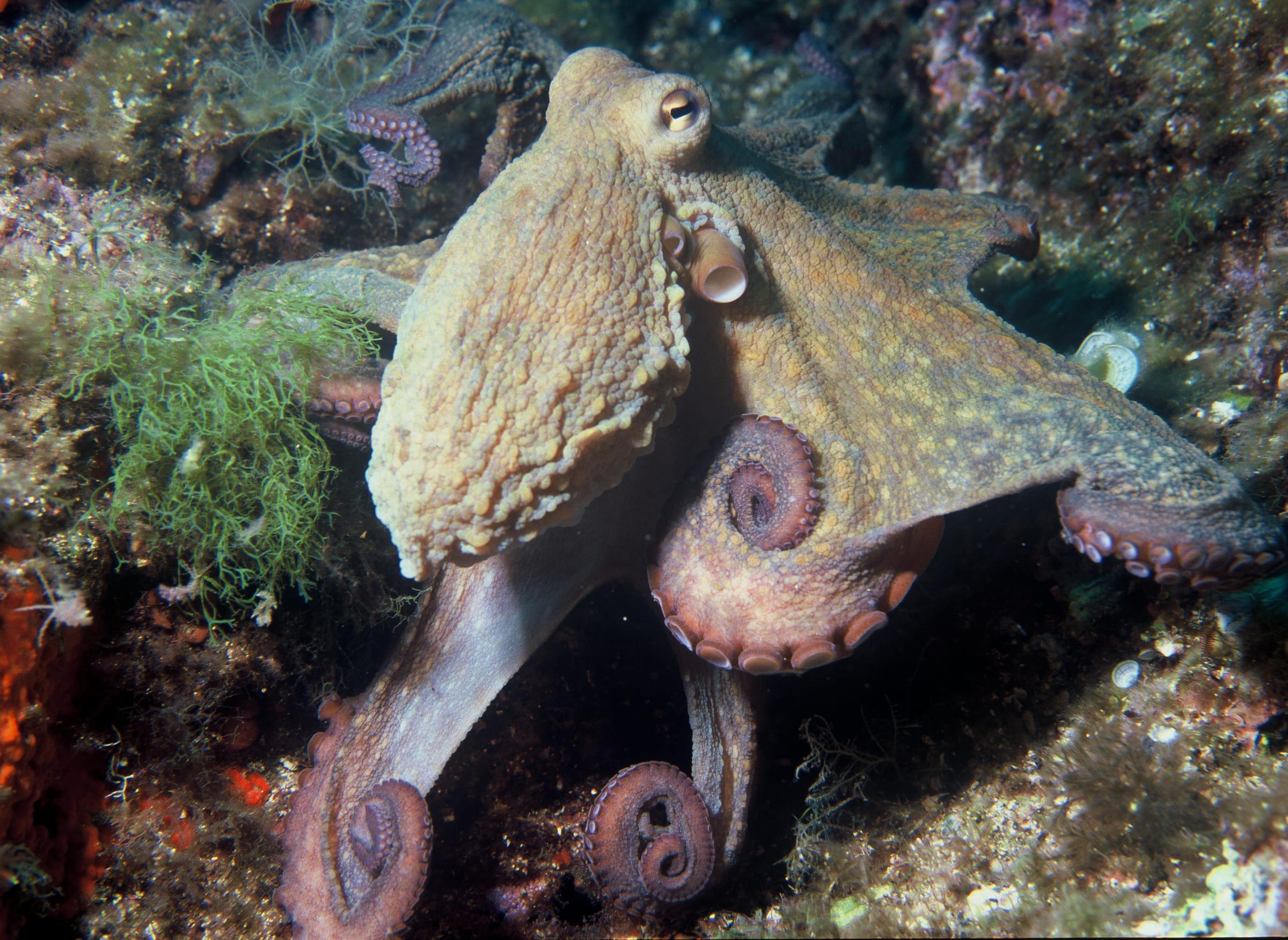
Octopuses are colour-blind. Their skin, however, is studded with opsins — the same light-sensitive proteins our retinas use. They appear to read colour through their bodies and respond in milliseconds, contracting chromatophores in the skin to match patterns they have never seen with their eyes. This is how an animal hiding on a coral can wear that coral. It does not look. It listens, with its surface, to the light.
A short, strange life
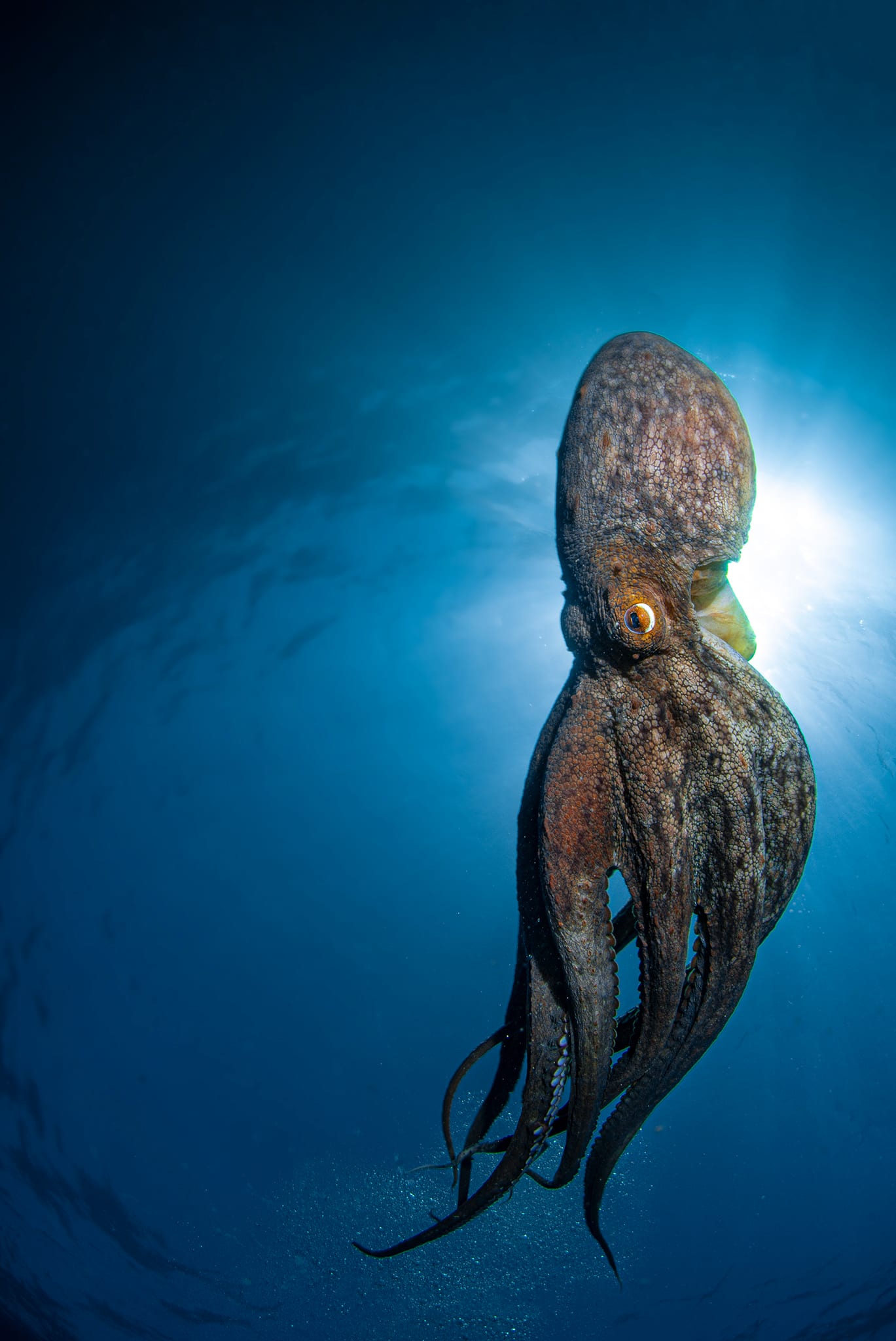
All this comes at a cost. A common octopus rarely lives longer than two years. A female lays a single brood — up to half a million eggs — and refuses food while she guards them, dying soon after they hatch. The species writes the entirety of itself in two summers and one careful death. Whatever the octopus is doing with all that cognition, it is not building a culture. It is building a body, and using it, and giving it away.