
The stoat (Mustela erminea), also known as the Eurasian ermine or ermine, is a species of mustelid native to Eurasia and the northern regions of North America. Because of its wide circumpolar distribution, it is listed as Least Concern on the IUCN Red List. The name ermine () is used especially in its pure white winter coat of the stoat or its fur. Ermine fur was used in the 15th century by Catholic monarchs, who sometimes used it as the mozzetta cape. It has long been used on the ceremonial robes of members of the United Kingdom House of Lords. It was also used in capes on images such as the Infant Jesus of Prague.
The stoat was introduced into New Zealand in the late 19th century to control rabbits. However, they have had a devastating effect on native bird populations; as such, the species was nominated as one of the world's top 100 "worst invaders".
A small white flame slipping under the winter snow.
Description
The stoat is similar to the least weasel in general proportions, manner of posture, and movement, though the tail is relatively longer, always exceeding a third of the body length, though it is shorter than that of the long-tailed weasel. The stoat has an elongated neck, the head being set exceptionally far in front of the shoulders. The trunk is nearly cylindrical, and does not bulge at the abdomen. The greatest circumference of body is little
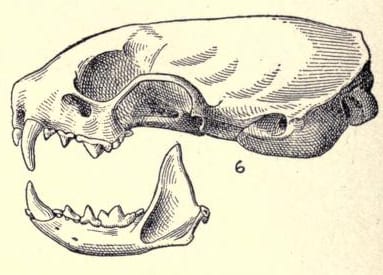
more than half its length. The skull, although very similar to that of the least weasel, is relatively longer, with a narrower braincase. The projections of the skull and teeth are weakly developed, but stronger than those of the least weasel. The eyes are round, black and protrude slightly. The whiskers are brown or white in colour, and very long. The ears are short, rounded and lie almost flattened against the skull. The claws are not retractable, and are large in proportion to the digits. Each foot has five toes. The male stoat has a curved baculum with a proximal knob that increases in weight as it ages. Fat is deposited primarily along the spine and kidneys, then on gut mesenteries, under the limbs and around the shoulders. The stoat has four pairs of nipples, though they are visible only in females.
Distribution and habitat
The stoat has a circumboreal range throughout North America, Europe, and Asia. The stoat in Europe is found as far south as 41ºN in Portugal, and inhabits most islands with the exception of Iceland, Svalbard, the Mediterranean islands and some small North Atlantic islands. In Japan, it is present in central mountains (northern and central Japanese Alps) to northern part of Honshu (primarily above 1,200 m) and Hokkaido. Its vertical range is from sea level to 3,000 m (9,800 ft). In North America, it is found throughout Alaska and western Yukon to most of Arctic Canada east to Greenland. Throughout the rest of North America, as well as parts of Nunavut, including Baffin Island and some islands in southeast Alaska, it is replaced by M. richardsonii.
Stoats have been present in Orkney, north of Scotland, since 2010, where they are a predator of the Orkney vole and native bird populations. In 2018, a stoat eradication plan, the Orkney Native Wildlife Project, was applied across the archipelago. By 2024 the Orkney Native Wildlife Project had spent £7.9m trapping more than 6,300 stoats, and facilitating recovery in the islands' populations of Orkney voles, curlews, hen harriers and waders.
Behaviour and ecology
In the Northern Hemisphere, mating occurs in the April–July period. In spring, the male's testes are enlarged, a process accompanied by an increase of testosterone concentration in the plasma. Spermatogenesis occurs in December, and the males are fertile from May to August, after which the testes regress. Female stoats are usually only in heat for a brief period, which is triggered by changes in day length. Copulation can last as long as 1 hour. Stoats are not monogamous, with litters often being of mixed paternity. Stoats undergo embryonic diapause, meaning that the embryo does not immediately implant in the uterus after fertilization, but rather lies dormant for a period of nine to ten months. The gestation period is therefore variable but typically around 300 days, and after mating in the summer, the offspring will not be born until the following spring – adult female stoats spend almost all their lives either pregnant or in heat. Females can reabsorb embryos and in the event of a severe winter they may reabsorb their entire litter. Males play no part in rearing the young, which are born blind, deaf, toothless and covered in fine white or pinkish down. The milk teeth erupt after three weeks, and solid food is eaten after four weeks. The eyes open after five to six weeks, with the black tail-tip appearing a week later. Lactation ends after 12 weeks.
Evolution
The stoat's direct ancestor was Mustela palerminea, a common carnivore in central and eastern Europe during the Middle Pleistocene, that spread to North America during the late Blancan or early Irvingtonian. The stoat is the product of a process that began 5–7 million years ago, when northern forests were replaced by open grassland, thus prompting an explosive evolution of small, burrowing rodents. The stoat's ancestors were larger than the current form, and underwent a reduction in size as they exploited the new food source. The stoat first arose in Eurasia, shortly after the long-tailed weasel, which is in a different genus (Neogale), arose as its mirror image in North America 2 million years ago. The stoat thrived during the Ice Age, as its small size and long body allowed it to easily operate beneath snow, as well as hunt in burrows. The stoat and the long-tailed weasel remained separated until 500,000 years ago, when falling sea levels exposed the Bering land bridge.