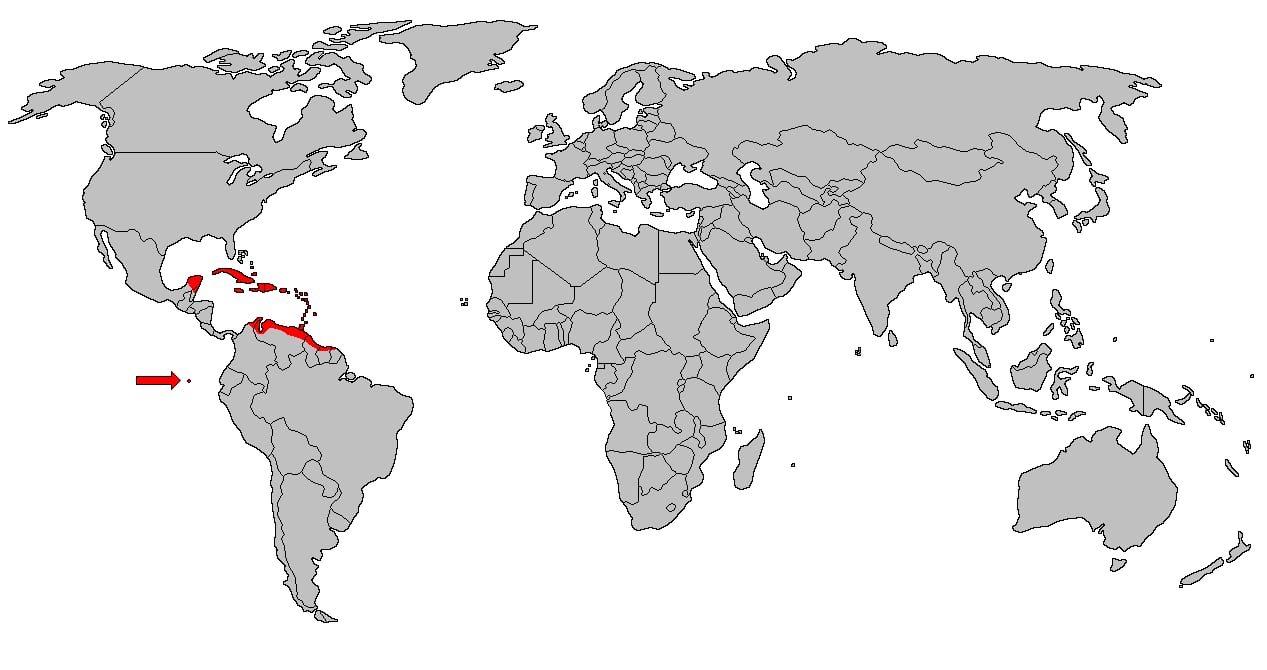
The American flamingo (Phoenicopterus ruber) is a large species of flamingo native to the West Indies, northern South America (including the Galápagos Islands) and the Yucatán Peninsula. It is closely related to the greater flamingo and Chilean flamingo, and was formerly considered conspecific with the greater flamingo, but that treatment is now widely viewed (e.g. by the American and British Ornithologists' Unions) as incorrect due to a lack of evidence. It is also known as the Caribbean flamingo, although it is also present in the Galápagos Islands. It is the only flamingo that naturally inhabits North America.
It is a cultural icon for the U.S. state of Florida, where it was formerly abundant in the southernmost regions, although it was largely extirpated by 1900 and is now only an uncommon visitor with a few small, potentially resident populations.
Eats pink shrimp and turns into the colour of sunset.
Description
The American flamingo is a large wading bird with reddish-pink plumage. Like all flamingos, it lays a single chalky-white egg on a mud mound, between May and August; incubation until hatching takes from 28 to 32 days; both parents brood their young. They may reach sexual maturity between 3 and 6 years of age, though usually they do not reproduce until they are 6 years old. Their life expectancy of 40 years is one of the longest in birds.
Adult American flamingos are smaller on average than greater flamingos, but are the largest flamingos in the Americas. They measure from 120 to 145 cm (47 to 57 in) tall. The males weigh an average of 2.8 kg (6.2 lb), while females average 2.2 kg (4.9 lb). Most of its plumage is pink, giving rise to its earlier name of rosy flamingo and differentiating adults from the much paler greater flamingo. The wing coverts are red, and the primary and secondary flight feathers are black. The bill is pink and white with an extensive black tip. The legs are entirely pink. The call is a goose-like honking.
It is one of the species to which the Agreement on the Conservation of African-Eurasian Migratory Waterbirds applies.
Distribution
The American flamingo breeds in South America (in the Galápagos Islands of Ecuador, coastal Colombia and Venezuela, and northern Brazil), in the West Indies (Trinidad and Tobago, Cuba, Jamaica, Hispaniola (the Dominican Republic and Haiti), The Bahamas, the Virgin Islands, and the Turks and Caicos Islands), and tropical and subtropical areas of continental North America (along the northern coast of the Yucatán Peninsula in Mexico, and formerly southern Florida in the United States). It is a vagrant to Puerto Rico, Anguilla, Barbados, Honduras, and (following its extirpation) Florida, although some Florida populations are now thought to be year-round residents. The population in the Galápagos Islands differs genetically from that in the Caribbean; the Galápagos flamingos are significantly smaller, exhibit sexual dimorphism in body shape, and lay smaller eggs. They are sometimes separated as Phoenicopterus ruber glyphorhynchus.
Marine biologists say that, although flamingos are native to the tropical south of the U.S., hurricanes have been known to drive flocks of flamingos north, leading to rare sightings in Kentucky, New York, Ohio, Pennsylvania and Virginia. Most of the birds return to where they came from, but occasionally, one breaks off from a flock so that there are examples of a flamingo hanging out by itself for years.
Mating and bonding behaviors
Mating and bonding behaviors of P. ruber individuals have been extensively studied in captivity. The American flamingo is usually monogamous when selecting a nest site, and incubating and raising young; however, extra-pair copulations are frequent.
While males usually initiate courtship, females control the process. If interest is mutual, a female walks by the male, and if the male is receptive, he walks with her. Both parties make synchronized movements until one member aborts this process. For low-intensity courtships, males and females walk in unison with their heads raised. In high-intensity courtships, males and females walk at a quick pace with their heads dropped in a false feeding posture. This high-intensity courtship stops at any point if either bird turns and the other does not follow, the heads are raised, unison movements are stopped, or the pace of movement is slowed. If the female is ultimately receptive to copulation, she stops walking and presents for the male. Long-term pairs do not frequently engage in courtship behaviors or in-group display. Pairs often stand, sleep, and eat in close proximity.
Adaptations
The American flamingo has adapted to its shallow-water environment in several ways. It has evolved long legs and large webbed feet to wade and stir up the bottom of the water bed to bring up their food source to then be retrieved. To feed, it has evolved a specialized beak which is hooked downward and features marginal lamellae on the upper mandible, and inner and outer lamellae on both the upper and lower mandibles. These are adapted for filtering out differently sized food from water. Depending on the food source in their area, diets depend on the exact morphology of their beaks on what can and cannot be strained out of them. The American flamingo's diet consists of small crustaceans (Artemia, Gammarus, Dotilla, and copepods), molluscs (Cerithidea, Cerithium, Paludestrina, Neritina, Gemma, and Macoma), some worms (Nereis), nematodes, insects (water beetles or ants) and their larvae (Ephydra, Chironomus, Thinophilus, Sigaria, and Micronecta), small fish (Cyprinodon), widgeon grass, seeds (Ruppia, Scirpus, Juncus, and Cyperus), algae, diatoms, and decaying leaves. They are also known to consume mud from which they are able to get microorganisms and bacteria and obtain nutrients. It submerges its head under water to retrieve its food, and may have its head under water for long times, which requires it to hold its breath.
Osmoregulation
The role of osmoregulation—the maintenance of a precise balance of solute and water concentrations within the body—is performed by a number of bodily functions working together. In P. ruber, the kidney, the lower gastrointestinal tract, and the salt glands work together to maintain the homeostasis between ions and fluids. In mammals, the kidneys and urinary bladder are the primary organs used in osmoregulation. Birds, however, lack a urinary bladder and must compensate using these three organs.American flamingos are saltwater birds that ingest food with a high salt content and mostly drink salt water (with an osmolarity of usually 1000), hyperosmotic to the bodies cells . From their high-salt diet, they would lose more water and have a greater salt uptake. One way in which they osmoregulate is through the use of a salt gland, which is found in their beaks. This salt gland helps excrete excess salt from the body through the nasal openings in the flamingo's beaks. When these birds consume salt, the osmolarity increases in the blood plasma through the gut. This causes water to move out of the cells, increasing extracellular fluids. Both these changes, in turn, activate the salt glands of the bird, but before any activity occurs in the salt glands, the kidney has to reabsorb the ingested sodium from the small intestine.