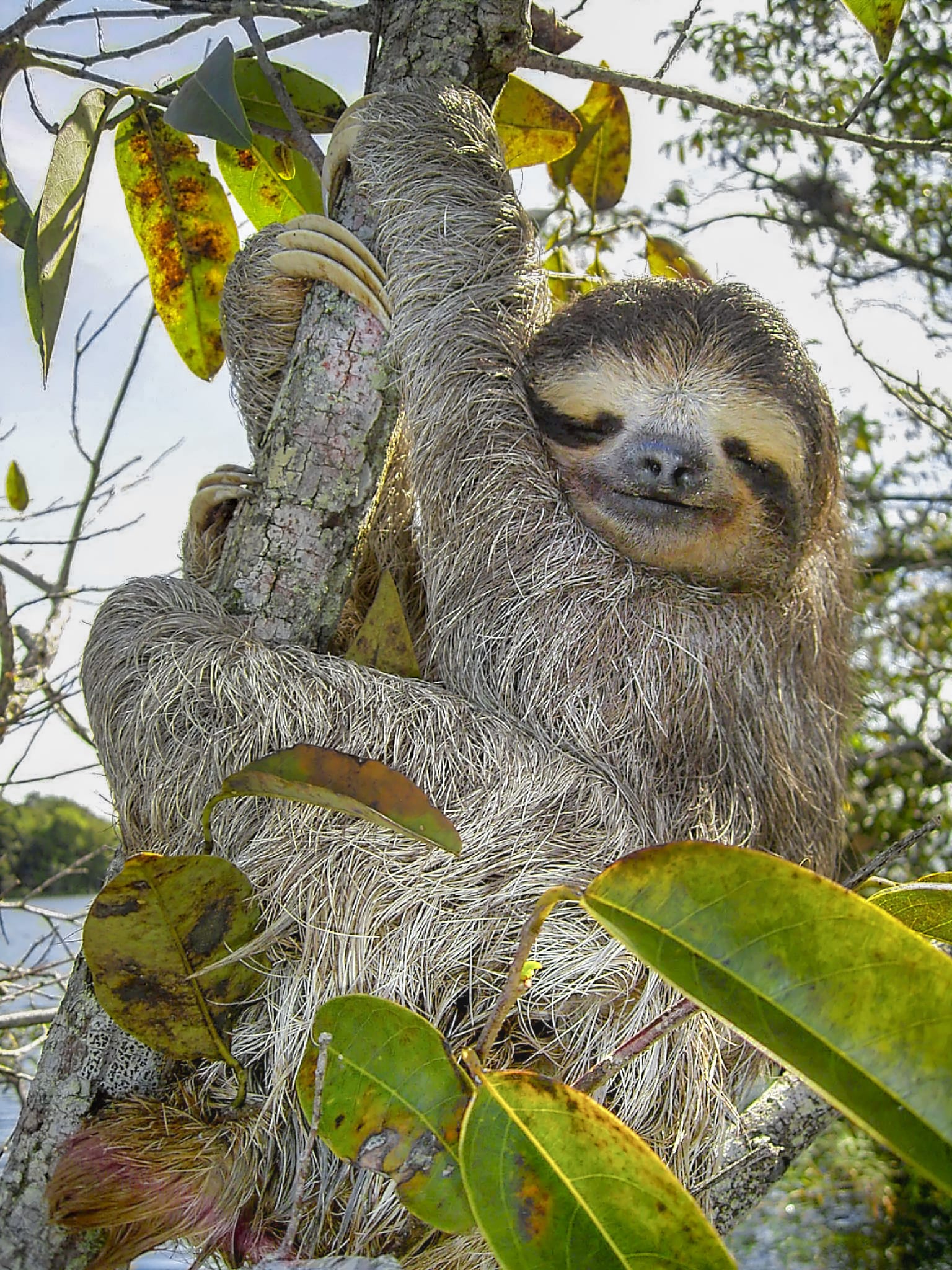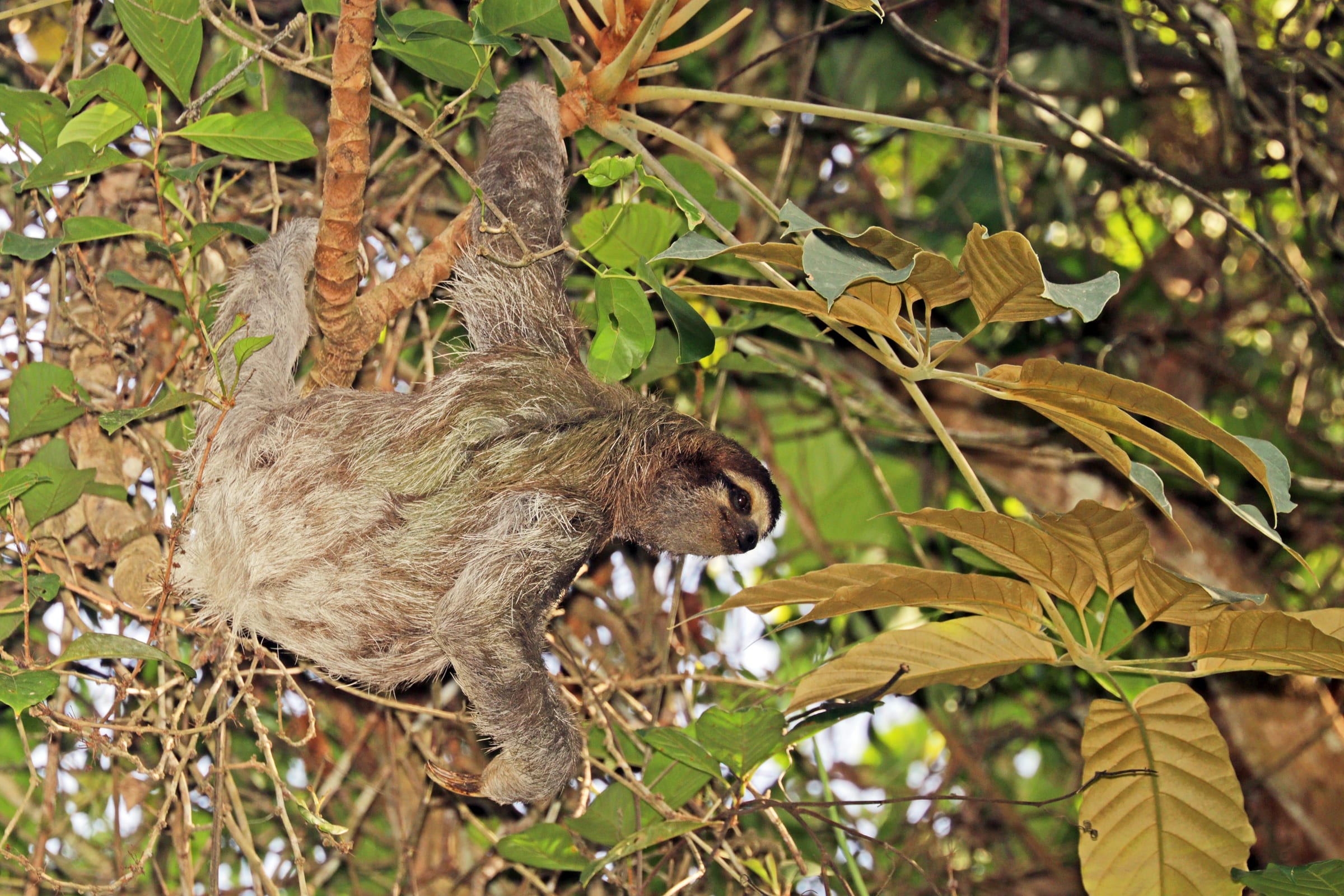
A sloth's metabolic rate is roughly half of what mammals its size are supposed to have. Its body temperature drifts with the air — rising into the canopy when the sun rises, falling toward the rainforest floor when night comes. It descends from the tree once a week, always to the same tree, to defecate, an act that costs it nearly a third of its body weight and is somehow the most dangerous thing it does. Most sloth deaths happen on the ground.
Up in the canopy, where it spends the rest of its life, the animal moves at a deliberate pace that is sometimes called laziness. It is not. The brown-throated sloth has so refined the art of doing little that its hair grows the wrong way — outward from the belly toward the back, because it spends its life upside-down. Its fur hosts a small green ecosystem of algae, which colours it the colour of the leaves it lives in, and which the sloth, in a closing of a loop almost no one sees, sometimes eats.
So refined the art of doing little that its hair grows the wrong way.
Upside-down anatomy
Sloths spend so much time hanging from branches that almost everything about their bodies has been rotated. Their hair parts along the belly, not the back, so rain drains away while they hang. Their lungs and stomach are anchored to the ribcage rather than allowed to press down on the diaphragm. Their long curved claws are not muscles you grip with but bones you hook over — a sleeping sloth can hang from a single arm without spending energy on it.
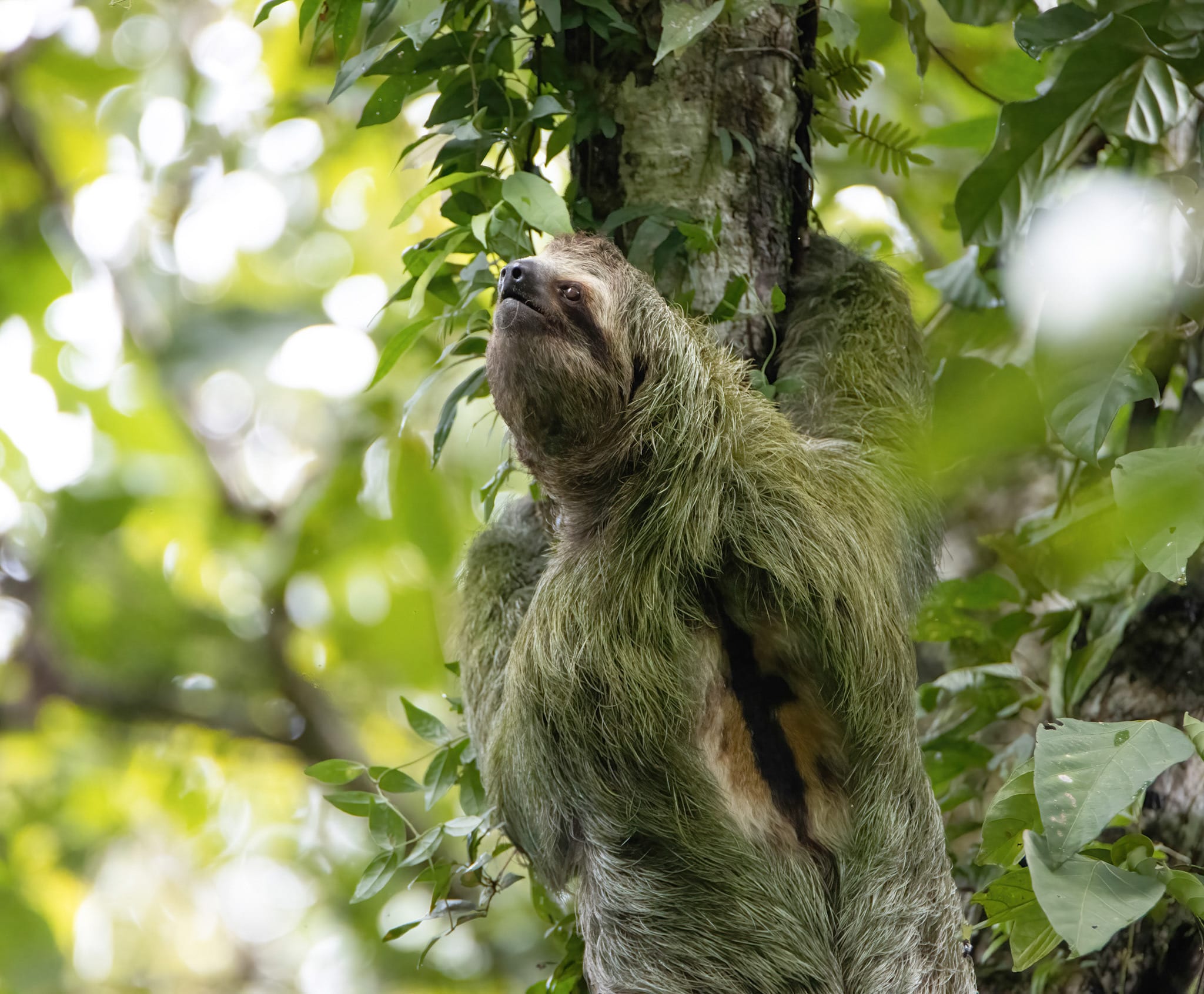
A garden in the fur
Each strand of sloth hair has lengthwise grooves that fill with water and host blue-green algae. The fur becomes, in effect, a vertical garden. Pyralid moths live in it. Beetles too. The whole assembly camouflages the sloth against the canopy and feeds it tiny supplements of algal protein when it grooms. A sloth carries its own meadow upon its back.
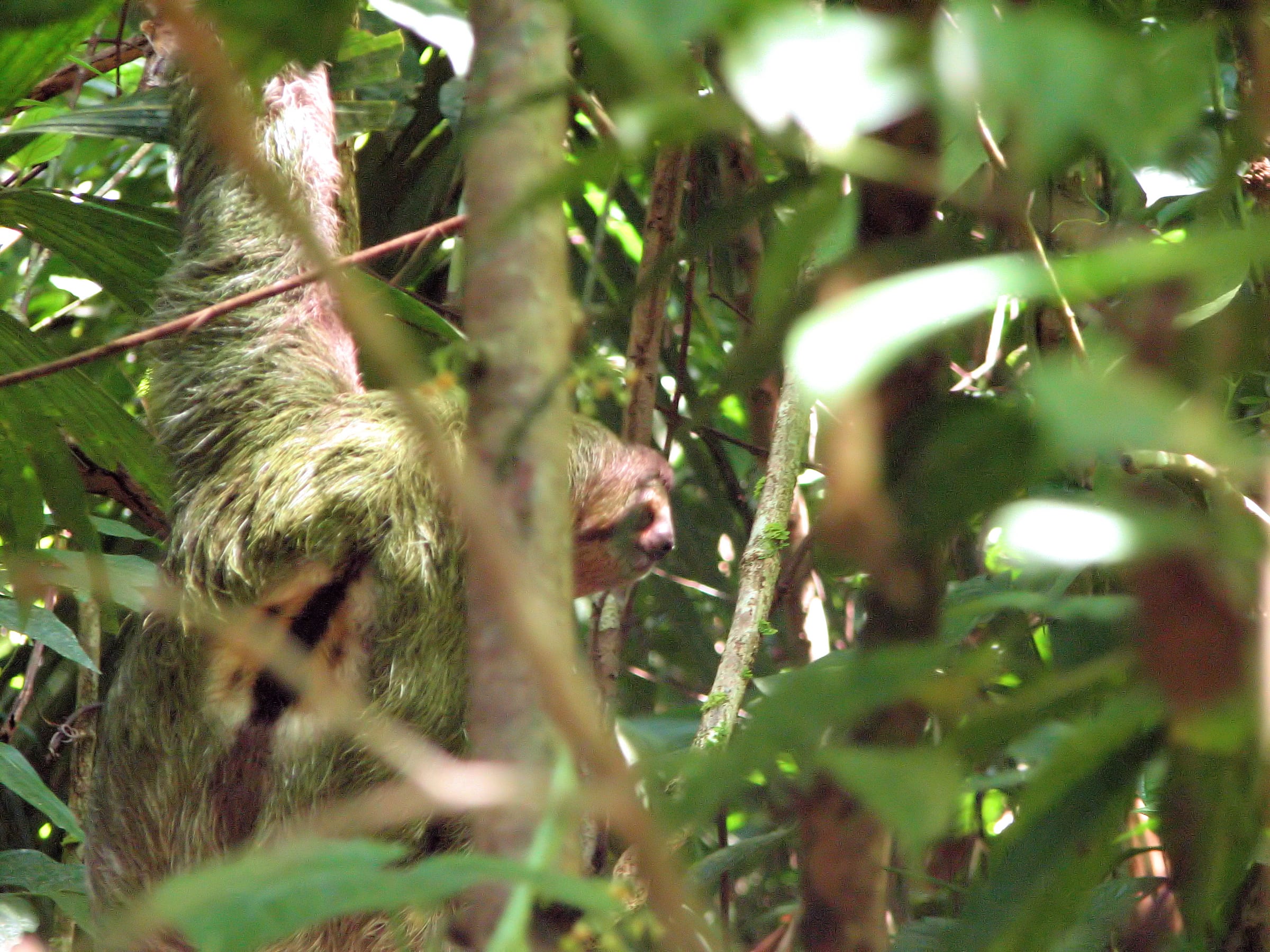
Slowness as strategy
Sloths eat leaves that are low in calories and protected by toxins. Digestion takes up to a month — long enough that a sloth may starve to death on a full stomach if the gut bacteria are disrupted. The slow metabolism is not laziness; it is the price of eating something nothing else wants. In return, the sloth needs almost no oxygen, can survive blood-oxygen levels that would kill most mammals, and lives twice as long as you would expect a small mammal to live in a rainforest full of harpy eagles.